UCEMC: Keeping Us Connected

The Washington Youth Tour is an annual event sponsored by the Tennessee Electric Cooperative Association and the state’s 23 electric co-ops. It provides these young leaders with an opportunity to explore the nation’s capital, learn about government and cooperatives, and develop their leadership skills. Students are selected for the trip by writing short stories titled “Electric Cooperatives – Connecting Communities” that explain how co-ops provide communities with much more than electric power. One of the favorite stops for the teens on tour is The Smithsonian and its 19 museums. While The Smithsonian is closed during the COVID-19 crisis, it is offering UCEMC members and students at home, free access to the virtual tours and educational links below. Enjoy!


UCEMC will continue to provide excellent and reliable electric service, but we are now taking extra safety precautions for members and our employees. Due to the COVID-19 (coronavirus) threat to the health and safety of our members, UCEMC lobbies will now CLOSE on Monday, March 23, until further notice. We appreciate your understanding and patience during these challenging times.
Bill payment and other Cooperative business may be conducted safely and securely by utilizing other UCEMC options:
Pay by Mail: Send your check or money order to UCEMC, P.O. Box 159, Carthage, TN. 37030.
Pay by Phone: You may pay by phone during regular business hours, 8:00 a.m. – 4:30 p.m. by calling your local district UCEMC office:
PaySite Kiosks – Two kiosks allow you to pay your UCEMC bill any time, 24/7 with cash, check, or credit card.
Drive-Thru Window – You may continue to pay your bill from the comfort of your vehicle at UCEMC district office locations during regular business hours.
New Service – Applications and instructions for applying for new service are available at the Drive-Thru Window until further notice.


The news and information we hear about the coronavirus changes by the hour and can be unsettling. Here at Upper Cumberland Electric, we’re concerned about the health and safety of our members and will strive hourly to stay in step with national guidelines and regulations.
During these stressful times, we understand that the elderly and those who are considered “high-risk” may prefer to stay at home and social distance themselves from a crowd. UCEMC has several convenient electric bill payment options to offer you some peace of mind.
Online at ucemc.com – Click on PAY MY BILL to get to the Customer Service Portal. Enter your account number that’s on the bill and your password. New to online bill pay? Click on NEW USER to set up your online bill payment option.
UCEMC Mobile App and Mobile Web App – Look for our name in the App Store or the Android Market. If you can’t find our App in the Android Market, that likely means your phone is not supported. Our Mobile Apps are secure and no personal information stores on your mobile device.
Mobile Apps are supported on the following platforms:
Our Mobile Web App version supports the following browser:
Our Mobile Apps are native Apps that can be downloaded and installed on your compatible mobile device. The Mobile Web App is a web portal that runs directly in the mobile browser on your smartphone or other mobile devices. Both will give you secure access to account information and will allow you to make payments on one or more accounts directly from your mobile device. The native Apps also allow you to register your accounts to receive push notifications for account milestones, such as approaching or a missed due date. Push notifications are not available through the Mobile Web App.
Pay by Phone: Members may pay by phone during regular business hours, 8:00 a.m – 4:30 p.m. by calling their local district UCEMC office:
PaySite Kiosks – Two kiosks allow you to pay your UCEMC bill any time, 24/7 with cash, check, or credit card.
Drive-Thru – You may continue to pay your bill from the comfort of your vehicle at UCEMC district office locations during regular business hours.
Co-ops are owned by the members we serve. This fact impacts everything we do here at Upper Cumberland Electric Membership Corporation. People always come before margins, and our employees are serious about the responsibility we have to provide power and support to our communities during these trying times.


The Cookeville District office of Upper Cumberland Electric Membership Corporation has reopened after sustaining significant damage from the tornado that ripped through Putnam County on March 3.
While all business has resumed at the Cookeville office, two banks will continue to take UCEMC electric bill payments temporarily as a convenience to anyone displaced by the storm. Putnam County members may pay their bill with a check or money order at the First Freedom Bank, 376 West Jackson Street in Cookeville, or at the bank’s Algood location, 614 West Main Street, across from Walmart and Potters. Immediate payments on Pre-Pay accounts must be made at the Cookeville office to prevent service interruption.
The Bank of Putnam County will temporarily accept UCEMC bill payments at three locations in Cookeville: 140 S. Jefferson, 237 S. Willow Avenue, and 1108 East 10th Street, and in Baxter at 404 Main Street. The Bank of Putnam County will accept cash, check, or money orders.
As of Saturday, March 7, power was restored to all UCEMC members whose homes were not too damaged to safely receive electricity.


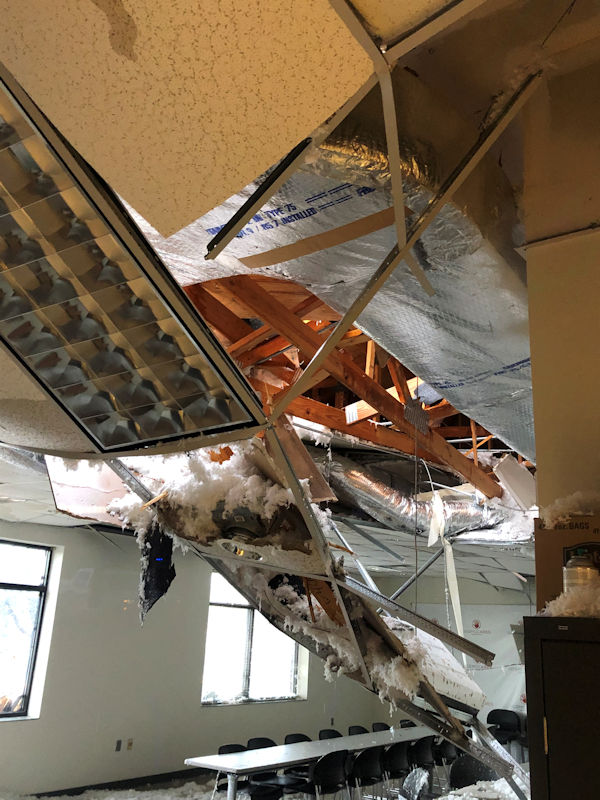

OUTAGE UPDATE 3/4/2020: UCEMC crews have restored power to more than 1800 homes in the Carthage area. However, 150-200 outages in Carthage remain due to 16 broken poles. In Cookeville, lines to 2000 homes along Highway 70, West Locust Grove Rd., and Bloomington Rd. are out of service and are being worked on at this time. The UCEMC Cookeville District office sustained significant harm, and communications systems are down. We are re-routing outage calls to other district offices to serve you. Thank you for your patience as we all work together in this recovery and repair effort across the UCEMC service area.
UCEMC offers these tips to help you stay safe:

 Make the most of your clothes dryer by ensuring an appropriate vent hose length. A shorter, unobstructed vent hose increases the efficiency of your dryer, dries clothing faster, and reduces lint buildup, which can create potential fire hazards.
These last weeks of a rainy winter might be delaying your outdoor plans but look around the house. There you’ll find at least three hidden opportunities to save energy––and money, especially if you enjoy do-it-yourself projects that don’t require a loan or a professionally-stocked toolbox.
If your goal is making your home more efficient, but you don’t want to break the bank, there are several DIY projects you can tackle now to increase energy savings. Here are three inexpensive efficiency upgrades that can help you save energy throughout the year.
Trim Dryer Vent
Level of difficulty: easy. Supplies needed: tin snips, gloves, measuring tape, and masking tape. Estimated cost: about $25 depending on the supplies you already have.
If your dryer vent hose is too long, your dryer is working harder than it has to, using more energy than necessary. The vent hose should be long enough for you to pull the dryer out a couple of feet from the wall, but the shape of the tube should form a line––it should not have a lot of slack, with twists and curves. A shorter, unobstructed vent hose increases the efficiency of your dryer, dries clothing faster, and reduces lint buildup, which can create potential fire hazards.
Measure, mark, and trim the hose to the desired length, then reattach the hose to your dryer and exterior vent. If you’re unsure about the hose length, check out YouTube.com for a quick video tutorial.
Seal Air Leaks
Level of difficulty: moderate. Supplies needed: caulk and caulk gun, weather stripping, gloves, putty knife, paper towels. Estimated cost: $25 to $50 depending on the materials you purchase.
Sealing air leaks in your home can help you save 10% to 20% on heating and cooling bills. Apply caulk around windows, doors, electrical wiring, and plumbing to seal in conditioned air. It would help if you also weather-stripped exterior doors, which can keep out drafts and help you control energy costs. Types of caulking and weather-stripping materials vary but ask your hardware or home store for assistance if you’re unsure about the supplies you need. For more information, the Department of Energy provides step-by-step instructions for caulking and weather stripping:
Insulate Attic Stairs Opening
Level of difficulty: moderate. Supplies needed: rigid foam board, faced blanket insulation, tape for foam board, measuring tape, utility knife, caulk and caulk gun, plywood. Estimated cost: $50 to $100.
A properly insulated attic is one of the best ways to optimize energy savings and comfort in your home. Still, many homeowners don’t consider protecting the attic stairs, or the opening to your attic space. Even a well-insulated attic can leak air through the stair opening, but luckily, there’s an easy fix.
An insulated cover box can seal and insulate the attic stairs opening. You can build your insulated cover box or purchase a pre-built box or kit from a local home improvement store like Home Depot or Lowe’s for about $60. If you decide to build your own, check out these step-by-step instructions from the Department of Energy: . If your attic opening is in a garage that you do not heat and cool, this upgrade will not be as effective.
Saving energy doesn’t have to be hard. With a little time and effort on these rainy days, you can maximize energy savings and increase the comfort of your home just in time for the dog days of summer.
Based on an article by Abby Berry, who writes on consumer and cooperative affairs for the National Rural Electric Cooperative Association.
.


Photo by Lisa Fotios
Spring is just around the corner, and you can practically smell the freshly-cut grass. If you’re in the market to upgrade your lawn care equipment, you may want to consider electric (or battery-powered) options.
Gas-powered lawn mowers and trimmers may be your go-to, but times they are a-changing’. Electric lawn care equipment offers consumers faster charging times, longer battery life, and quieter, greener products compared to their gas-powered counterparts. Here are three ways you can electrify your lawn care this spring.
Electric Lawn Mowers
Electric lawnmowers have come a long way over the last few years. Early models required corded connections, which were tricky to manage––but we’re ready to cut the cord. Newer cordless electric mowers are certainly more expensive than gas-powered mowers. Still, much of that upfront cost is recoverable. Electricity is a less expensive fuel than gas, and electric engines generally require less maintenance than gas engines. Cordless electric mowers typically range from $200 to $500.
Electric mowers are suitable for most lawn care needs. The batteries typically require about one to two hours to fully charge, and most batteries can run for a full hour. That said, if you have a large yard (half an acre or larger), a gas-powered option may be best to suit your needs.
Electric Trimmers
Cordless electric string trimmers are an excellent option for most lawns. Traditionally, like lawnmowers, string trimmers have typically been powered by gas. But new versions of electric trimmers are improving and are now considered worthy competitors of gas-powered models.
Cordless electric trimmers are much quieter and simple to start, but most batteries last only about 30 to 45 minutes. So, if you have a lot of space to trim, you may want to consider a back-up battery or plan to work in short bursts. If you’re interested in purchasing an electric trimmer, the main factors to consider are the battery’s life, charge time, and power. Costs can vary depending on your needs, but you can find a quality version for about $100.
Electric Leaf Blowers
After cutting and trimming your lawn, you’ll need to clear off those walkways and patios for the finishing touch. If you don’t want to deal with the maintenance of a gas-powered blower or the restraints of a corded blower, a cordless electric version is a great option.
Cordless electric leaf blowers are lightweight and easy to maneuver. They don’t offer quite as much power as gas-powered and corded blowers, but if your leaf-blowing and clearing needs are minimal, a cordless electric leaf blower can get the job done. Costs for a cordless electric blower vary depending on power and battery quality. Expect to pay about $150 and up for a dependable model.
If you’re looking to electrify your lawn care equipment, be sure to do your homework. Search online for the latest reviews, and check trusted websites like ConsumerReports.org. With a little research, you’ll be well on your way to Lawn of the Month – with less maintenance, hassle, and noise (and your neighbors will thank you!).
Abby Berry writes on consumer and cooperative affairs for the National Rural Electric Cooperative Association, the national trade association representing more than 900 local electric cooperatives. From growing suburbs to remote farming communities, electric co-ops serve as engines of economic development for 42 million Americans across 56 percent of the nation’s landscape.

“Where there’s smoke, there’s fire, and where there’s fire, there is potential for glass. Where there is glass, there is light. Where glass and light meet, you may find magic.”
This piece was created for you by Curtiss Brock. If you receive a beautiful piece of glass art as a gift, you might find this tag on the bottom. If so, you are the proud owner of a much-coveted creation made locally by a celebrated Upper Cumberland craftsman. Curtiss Brock is an established glass artist with work in more than 25 museum collections around the world. His art lights up the room at the Appalachian Center for Craft in Smithville. As if that’s not enough to keep him busy, he heads up the glass department at Tennessee Tech, bringing along the next generation of glass artisans.
The art professor founded his company CB Glass as a vehicle for developing limited-edition blown glass pieces. His focus is on function and originality of design as he challenges himself as a craftsman and designer to create affordable, yet beautiful, unique pieces. “I don’t want people to have to take out a second mortgage on their home just because they fall in love with a piece of glass,” Brock jokes. We recently visited the Appalachian Center for Craft with Upper Cumberland Tourism Director Ruth Dyal. We were fascinated with the design, colors, and craftsmanship of Brock’s pieces on display in the gallery. Brock was so kind as to answer the many questions we had about his work when we caught up with him between classes at TTU:
When did you first develop an interest in working with glass?
I first started working glass when I went to college in 1980. I was working in wood and other materials. Still, my roommate was a glassblower, and in the evenings, he would have me come to the studio and help him. Unlike woodworking, much of glass blowing is a team effort. I became fascinated with the team approach to art as well as this magnificent material.
What “speaks to you” about glass that led you along this path?
Glasses of credible material can be soft, hard, transparent, opaque, sharp, or smooth. There are so many different processes and approaches you can take to turn it into anything you want. The government has always been interested in glass for its malleability and optics in various projects.
How would you describe the experience of glass art to a novice?
Working with glass is different from most things are in life. Say you wanted to learn how to run a marathon. Well, at least you had walked before and had some general idea of how to begin your first step. Or say you wanted to write a book. Most likely, you can at least write a declarative sentence, and there’s a place to start. But with glass, most people have no prerequisites or previous experience. It’s a whole new learning experience; everything from learning the skill of handling the material to figuring out what it is you want to do with it as an artist or creative person.
Is working with glass hazardous?
Anytime you work around furnaces that are 2000°, you run the risk of being burned. It’s just part of the process. But in general, you can make it through my intro class without ever having being burned because the course is set up in such a way that makes it very safe. I would be lying if I said I had never been burned, but the better I get at working glass, the fewer burns I get. It’s just an experience thing. The same could be said about burning yourself in the kitchen when you’re learning to cook.
Are glass studios an expensive undertaking?
The Appalachian Center for Craft has one of the most beautiful glass studios in the country, and I built a large part of the hot glass equipment myself. It’s not something you make “once and done” because most of the machines see excessive temperatures from 1000 the 2400° and is in a constant state of slow decay. Over the years, I’ve learned how to develop better, stronger, and most importantly, more efficient equipment. You don’t touch the glass with your hands in the hot process, so the specialized tools you use become extensions of your hands. Each glass project can be expensive and complicated and might take years of practice and hard work. It’s different than if you had a woodshop. When you aren’t using the woodshop, you can turn off the lights and go home. In the glass studio, the furnace is running 24 hours a day, seven days a week, and we are either charging and adding glass to the stove or removing the glass and making works of art. Most of my students are working shifts of 3 to 6 hours in the studio off and on. Some shifts start as early as 6 a.m. and sometimes run as late as midnight.
Approximately how much time do you spend on each piece, and how do you determine the price?
There’s an old saying in the glass world: when someone asks you how long it took to make a piece, you reply “two hours and 25 years.” Twenty-five years to get the experience to work for two hours and produce highly-skilled work. I price my work in several different ways. It’s no different than pricing other art products in the marketplace. You add material costs, the time spent on that piece, the overhead, and calculate that along with the skill required. The uniqueness and beauty of that given object are also considered.
Where are some of the other places we may find your work?
My work is shown and sold here at the Appalachian Center for Craft gallery as well as other galleries across the country. Pieces can be purchased through an online store called the Artful Home.
Since UCEMC is in the business of providing power for light, how important is our work, to your work?
The power that UCEMC provides is critical in many ways when working in glass. I use it to light the studio so I can see, and an integral part is the power needed for all the electric ovens. The blowers used to cool the glass, and the systems used to run all of the equipment safely, are all-electric. We’re always on the watch for a blackout as we must keep the furnace running during those times. When electrical power isn’t provided, we have to set up a generator. We’re grateful for all of the effort and technology UCEMC has put into keeping the power on. In comparison to other states, the Upper Cumberland is still economical in terms of the cost of electricity. For this reason, a number of my students have set up electrical blast furnaces instead of gas.
Then, of course, there is the crucial part light plays in the display of our work; once a piece is in the gallery, light reflects, refracts, and shows off the colors, cuts, and design of our art. Light brings glass to life.
Where do you find inspiration for your unique pieces?
My inspiration comes from many factors. Nature plays a significant role. I also work hard to be creative and come up with unique and different approaches to working with glass. Some of my work is sculptural, while other pieces, like the lamps, are more functional. Whether it is a sculpture or a functional wine glass, I hope that they can bring a higher level of joy and quality into the owner’s life. Ideas, everyone has them, but my job is to select a few of my better ones and bring them into reality. The only way I know how to do this is through a lot of hard work, some calloused hands, and a clear idea of what I feel brings quality to a handmade object.
Do you work in other mediums?
Glass can be used with lots of different materials. I also work in wood or metal or anything that I feel would support the glass and work well together.
(12) Some of your pieces are functional in the home. Tell us about those.
I have two different styles and directions for my work; a line of more functional pieces, like my bowls and lamps, which are designed and signed by CB Glass. These are decorative objects that are often used in the home or given as gifts. Then there are my “one-of-a-kind” art designs. These pieces take hours and hours to make, and each one is unique. Altogether they represent the 30 years of my life that I have dedicated to working glass. Museums and collectors around the world feature my pieces. I have pieces in more than 25 museum collections. They can be challenging to find on the internet, but the easiest way is to check out my website Curtissbrock.com.
Curtis Brock’s collection is currently on display and available for purchase at the Appalachian Center for Craft, 1560 Craft Center Drive, Smithville, Tennessee, 37166.
###</code></pre>

UCEMC is always working to improve our operational efficiency so we can provide the most reliable electric service possible for the people we serve. We rely on data for nearly every aspect of our operations, and that is why we need your help. By making sure we have your most accurate and complete contact information, we can continue to provide a high level of service that you expect and deserve. Accurate information enables us to improve customer service and enhance communications for reporting and repairing outages. It also allows our consumer-owners to receive information about other valuable programs, events, and activities. Up-to-date contact information can potentially speed up the power restoration process during an outage. The phone number you provide to us will eventually link to your service address in our soon-to-be-implemented Outage Management System (OMS). When you call to report an outage once our OMS is in place, our system will recognize your phone number and match it with your account location. Accurate information will help our OMS predict the site and possible cause of an outage, making it easier for our crews to correct the problem. While we always do our best to maintain service, we occasionally have to plan service interruptions to update, repair, or replace equipment. In these instances, we can provide advance notification to affected members through automated phone messages, text messages, or email if we have your updated contact information and communication preferences. Keeping the co-op updated with your information also helps us when there’s a question about energy use or billing.
Emails and text messages notify registered members of any changes in co-op event details. Also, discrepancies on your account can be taken care of promptly if UCEMC has accurate account information. If you’ve been a long-time member of UCEMC, likely, your account information isn’t the latest. Many members now use a cell phone as their primary phone service, and we might not have that number in our system. You can be confident that UCEMC will never sell your information. It is for UCEMC to communicate with you regarding your electric service. Please take a moment to confirm or update your contact information on this website by going to Pay My Bill and clicking on the Customer Service Portal. By doing so, you will be helping us improve service and efficiency so we can better serve you and all members of the co-op.