Author: UCEMC Communications

The Upper Cumberland Electric Membership Corporation (UCEMC) is an electric power distribution cooperative. UCEMC is owned and operated by its members and distributes electric power through more than 4,600 miles of lines to more than 50,000 members located primarily in Jackson, Overton, Putnam and Smith Counties and northern DeKalb County. Several members are served in “fringe” areas of Clay, Fentress, Macon, Pickett, White, and Wilson Counties.

Celebrating the People Who Power UCEMC

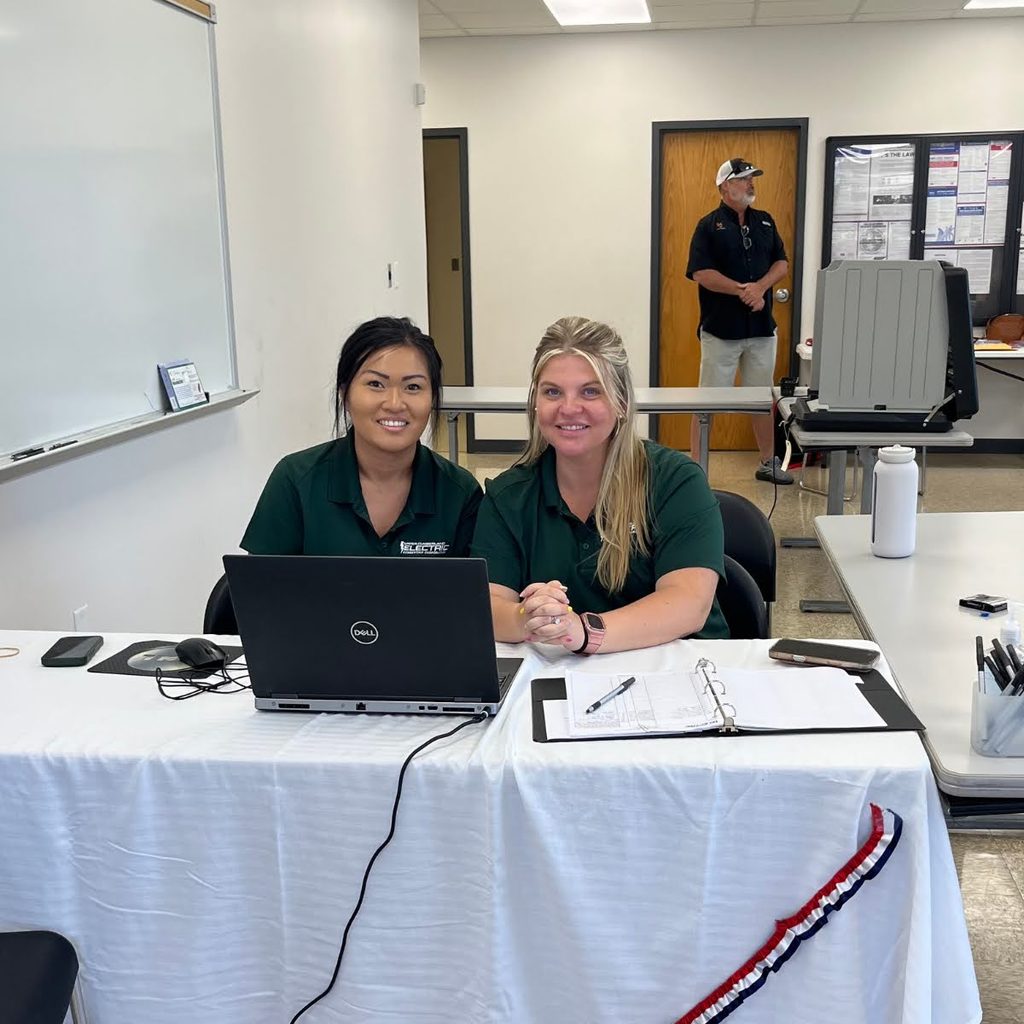
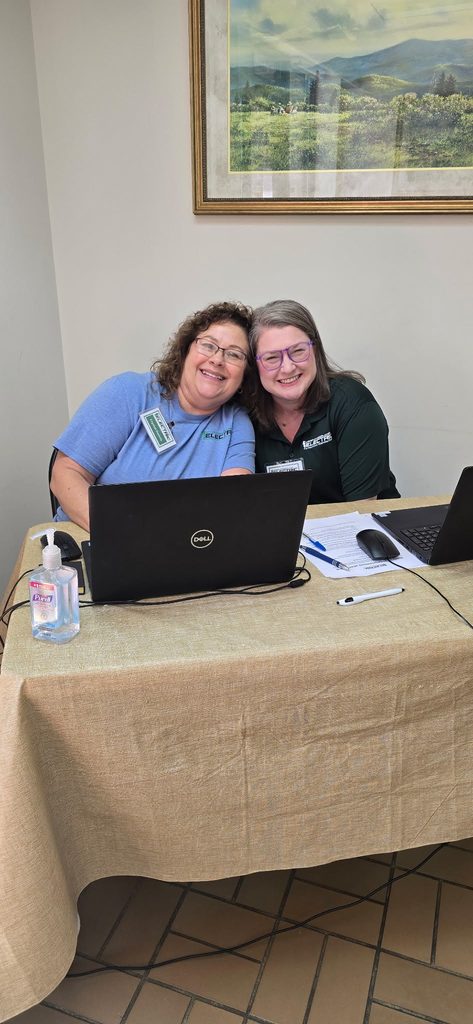
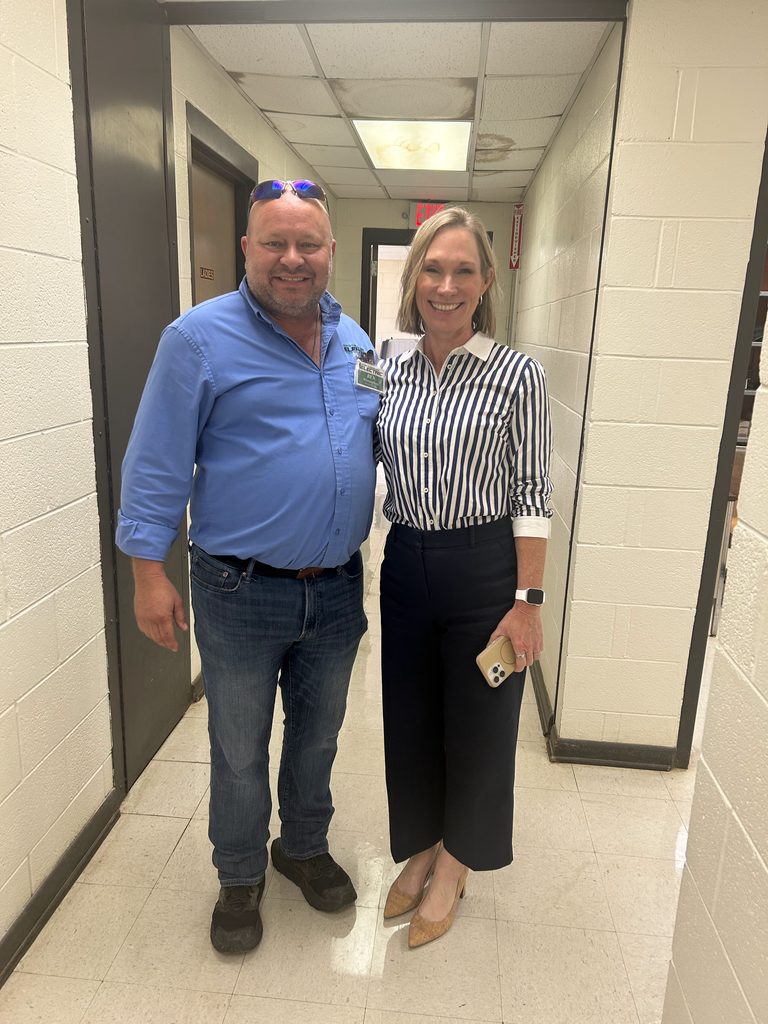
Employee Appreciation Week provided an intentional opportunity for UCEMC to pause and recognize the employees who make our cooperative strong.


Electric cooperatives are built on people serving people. While members often see crews restoring power after storms or speaking at community events, it takes a wide range of departments working together to deliver reliable electricity and responsive service every day. Throughout the week, we highlighted those departments and the important work they do.


We began by recognizing our Finance and Accounting and Engineering teams. Finance and Accounting ensures faithful stewardship of cooperative resources, accurate reporting, and long term financial stability. Their work protects the integrity of our organization and supports responsible decision making. Engineering designs new services, plans system improvements, evaluates equipment needs, and prepares for future growth. Together, these teams help ensure UCEMC remains stable, forward thinking, and prepared for tomorrow.


We continued by celebrating our District crews, Operations team, and Right of Way professionals. These employees work in the field maintaining substations, responding to outages, clearing vegetation, and strengthening infrastructure across our service area. Their work is physically demanding and often performed in challenging weather conditions. They represent UCEMC in communities every day and are essential to the reliability our members expect.


Midweek, we highlighted our Member and Community Engagement teams, including Consumer Service Clerks, Member Services, Key Accounts, Administrative Support, Communications, and IT. These departments connect directly with members, support economic development, manage technology systems, and ensure clear and transparent communication. They help members navigate questions, secure systems from cyber threats, and build relationships that strengthen our communities.


We also recognized our Executive Leadership, Executive Administrative Support, Purchasing, Human Resources, and Safety teams. These departments provide strategic direction, secure resources, support employee development, and reinforce a culture of safety and accountability across the organization.


We concluded the week on National Employee Appreciation Day by celebrating every UCEMC employee. From field crews to office staff, from planning and budgeting to system design and member support, every role contributes to our mission.


Employee Appreciation Week reminded us that reliability does not happen by accident. It is the result of dedicated, knowledgeable, and service minded individuals working together for the benefit of our members.


We are grateful for our employees not just during one week each year, but every day.

Building a Culture of Safety at UCEMC

At UCEMC, safety is more than our top priority. It is a shared responsibility and a core value that guides every decision we make.


National Safety Day provides an opportunity to pause and reflect on the importance of protecting our employees, our members, and the communities we serve. Delivering reliable electricity requires skill, coordination, and commitment, but it also requires a culture where safety is woven into every task, every process, and every conversation.


From the moment a crew rolls out to respond to an outage to the planning that takes place in the office, safety is always part of the equation. Our linemen operate heavy equipment, work at heights, work with high voltage, and respond in challenging weather conditions. Our operations team maintains substations and critical infrastructure. Our right of way crews manage vegetation to reduce risk. Even inside our offices, safety protocols help protect employees and members alike.


UCEMC has a dedicated Safety team that works year-round to evaluate procedures, lead training, and strengthen our overall safety program. But safety does not come from one department alone. We also maintain a Safety Committee made up of employees from across various roles within UCEMC. These team members bring real world experience and practical insight to the table. They review videos, discuss employee ideas, test improvements, and help shape safety decisions from the perspective of those who rely on these procedures every day.


This structure ensures that safety initiatives are not simply top down policies, but thoughtful practices shaped by the people working in the field and offices. When employees have a voice in safety discussions, the culture becomes stronger and more effective.


Another key part of our safety culture is our Near Miss reporting program. This program allows employees to report situations that could have resulted in an accident but did not. These reports are reviewed by our Safety department to determine whether process changes, additional training, or system adjustments are needed. The program encourages transparency and open communication without fear of blame or discipline. It allows us to learn from potential risks before they become real incidents.


For us, safety is not about statistics. It is about people. It is about ensuring that every employee returns home safely to their family at the end of the day. It is about protecting our members when they interact with our crews or facilities. It is about maintaining a reliable electric system in a responsible way.


On National Safety Day and every day, UCEMC remains committed to fostering a culture where safety is proactive, collaborative, and continuous. Because when safety comes first, everyone benefits.

Understanding TVA’s Fuel Cost Adjustment

TVA’s fuel costs are rising, and that is leading to an increase in the fuel cost adjustment that is included in your electric bill. At UCEMC, we want to keep our members informed about what is changing, why it is changing, and what it may mean for your household.


UCEMC is a distribution cooperative that purchases electricity from TVA on behalf of our members. UCEMC is a not-for-profit and does not retain any portion of TVA’s fuel cost adjustment. 100% of this adjustment is passed directly through to TVA.


What Is the Fuel Cost Adjustment
The fuel cost adjustment reflects TVA’s cost to generate electricity. TVA uses a mix of resources to produce power for the region, including natural gas, coal, nuclear, and hydro. When TVA’s generation costs rise or fall, the fuel cost adjustment can change as well.


This is not a base rate increase. It is a pass-through cost tied directly to TVA’s power generation expenses.


The fuel cost adjustment is variable and can change from month to month based on TVA’s actual cost to generate electricity. For the month of March, TVA’s fuel cost will increase. This increase could continue for several months, or it could go back down sooner depending on TVA’s actual generation costs.


Why Fuel Costs Are Increasing
TVA’s fuel costs rose for several reasons, including:

  • Higher electricity demand across the region
  • Changes in fuel and commodity market pricing
  • Reduced hydro availability
  • System and operational needs required to meet demand reliably


Because TVA must ensure reliable power for the entire region, generation costs can shift depending on these factors.

What Members May See
For a typical home using 1,000 kilowatt hours, the March fuel cost adjustment is expected to equal approximately a $15.91 increase for the month. Because every home uses a different amount of electricity, the exact impact will vary.


“We’re advising our members to conserve power to keep their costs down,” says Jennifer Brogdon, General Manager and CEO of Upper Cumberland EMC. “You pay for only what you use, and members who use less will see the savings on their bill.”


Prepay and traditional monthly billing members are charged the same electric rates, including the same base rate and fuel cost adjustment.

How to Monitor and Manage Your Usage
Even when power costs increase, managing how much electricity you use can help reduce the overall impact on your bill.


You can view your daily usage through the UCEMC Member Portal at ucemc.com or the UCEMC Mobile App.


Tracking daily usage helps you better understand patterns and identify opportunities to reduce consumption over time.


We Are Here to Help
We understand that changes in power costs can raise questions. UCEMC is committed to keeping our members informed and helping you understand your bill.


If you have questions, our Member Services team is available to review your account, walk through your usage, and share helpful tools and resources.

We’re Hiring – Accounting Clerk

Carthage, TN

Full-Time, Days


About UCEMC: Empowering Communities, Enhancing Lives


At UCEMC, we believe in delivering more than just power; we deliver a sense of community and excellence. Join a team where your dedication is valued, and your contributions make a real impact on the lives of our 54,000+ members. Learn more at www.ucemc.com.


Join our team as an Accounting Clerk at UCEMC!


Are you detail-oriented, organized, and committed to accuracy? Do you enjoy working with financial records and supporting essential operations that keep a cooperative running smoothly? If so, we have the opportunity for you! Upper Cumberland Electric Membership Corporation (UCEMC) is seeking an Accounting Clerk to join our Administrative Services team in Carthage.


Job Summary:


Responsibilities also include balancing daily receipts, producing daily cash sheets, generating bills and notices, processing bank drafts and refund checks, assisting with month-end reports, answering member inquiries via email and phone, and preparing scheduling calendars for meter readings and cut-offs. This position requires strict confidentiality of member information, strong attention to detail, and the ability to work independently with limited supervision.


Job Requirements:

  • Minimum high school diploma or GED required, with emphasis in bookkeeping, general business, and computer operations
  • Working knowledge of accounting principles; familiarity with RUS accounting principles preferred
  • Minimum one year of accounting experience preferred, preferably in a utility setting
  • Experience in customer accounting operations preferred
  • Ability to operate standard office equipment and have basic knowledge of mathematics
  • Strong organizational skills and attention to detail
  • Must be able to work under stress and maintain confidentiality of member information
  • Ability to research information and analyze data to solve problems
  • Ability to work efficiently with limited supervision
  • Willingness to rotate among accounting section duties
  • Willingness to participate in additional training in accounting principles
  • Ability to obtain and maintain First Aid and CPR certification
  • Ability to sit, stand, bend, stoop, and lift up to 25 pounds
  • Ability to respond to call-outs and work extended hours, including weekends and holidays when required
  • Valid Tennessee driver’s license


Benefits:

  • 401(k) with company matching
  • Health, dental, and vision insurance
  • Paid vacation and sick days
  • Paid holidays
  • Competitive salary
  • Opportunities for advancement


Apply Today!


If you are dedicated, forward-thinking, service minded, and want to be a part of a team that powers our community, we encourage you to apply.


Apply today at https://ucemc.bamboohr.com/careers/29


Applications will be accepted through March 13, 2026 at 4:30 PM CST. For more details, contact UCEMC’s Human Resources Department at 1-800-261-2940, opt 3, opt 5, ext. 123.


UCEMC is an EEO employer and an affirmative action employer. UCEMC is committed to guaranteeing to its employees and all applicants for employment equal employment opportunities regardless of race, gender, age, religion, national origin, genetic information, disability or veteran status, or any other protected status, except where such status is a bona fide occupational qualification.


Power Up Your Career with UCEMC – Local People Local Power

Presidents, Power, and the Story of Rural America

It is hard to imagine life without electricity.

Flip a switch and the lights come on. Plug something in and it works. Heat, air conditioning, refrigeration, medical equipment, internet access. Nearly every part of daily life depends on reliable power.

But not long ago, that was not the case in rural Tennessee.

This Presidents’ Day, we honor all who have served as President of the United States. Here in Tennessee, that history feels especially close to home. Three presidents came from our state. Others shaped the Tennessee Valley in ways that still impact our daily lives. And together, their leadership helped create the systems that brought electricity and opportunity to rural communities like ours.

Because less than 100 years ago, most rural families in Tennessee did not have electricity.

Long before power lines stretched across our hills and farmland, Tennessee was already shaping the direction of the country.

Andrew Jackson, the seventh President of the United States, made his home in Tennessee and led the nation beginning in 1829. His presidency reflected a belief that the voices of everyday citizens mattered.

James K. Polk, raised in Tennessee, became the eleventh President in 1845. His administration expanded the nation’s borders significantly, adding vast stretches of rural land that would one day need infrastructure and services.

Andrew Johnson served as Tennessee’s military governor before becoming the seventeenth President during Reconstruction, a time focused on rebuilding and strengthening the nation’s foundation.

None of these leaders dealt with electricity directly. But they helped shape a growing country that would later face a defining question: How do we ensure rural America is not left behind?

By the early 1930s, that question became urgent.

When Franklin D. Roosevelt took office in 1933, nearly 90 percent of rural homes in America did not have electricity. In Tennessee and throughout the South, farm families relied on kerosene lamps for light. Water was pumped by hand. Food preservation was limited. Modern conveniences available in cities were out of reach for rural communities.

Private utilities declined to extend service into rural areas because it was expensive and not profitable enough.

For rural Tennessee, electricity was uncertain.

In 1933, Roosevelt signed the Tennessee Valley Authority Act into law, creating the Tennessee Valley Authority (TVA).

TVA was designed to address challenges facing the Tennessee Valley region. It improved flood control, strengthened navigation, stimulated economic development, and generated affordable electricity.

For Tennessee, this was transformative.

TVA did not just generate power. It generated possibility.

But generation was only part of the solution. Rural communities still needed a way to deliver that power to homes and farms.

In 1936, Roosevelt signed the Rural Electrification Act, providing low-interest loans so rural communities could form electric cooperatives and build distribution systems.

Local farmers and community leaders organized, borrowed funds, and began building systems from the ground up. It was not easy work. Poles were set by hand. Lines stretched across fields and hills. But slowly, the lights began to turn on.

Electric cooperatives were not created to make a profit. They were created so communities could serve themselves.

And that is where UCEMC’s story begins.

In 1938, UCEMC’s first board of directors consisted of five individuals who believed their rural communities deserved electricity.

Each of those five men contributed five dollars of their own money. They gave that money to the cooperative’s first attorney so he could purchase a train ticket to Washington, D.C., and retrieve the paperwork needed to officially form an electric cooperative.

With the cooperative officially formed, UCEMC gained the ability to purchase assets from the Tennessee Power Company, which at the time was providing electricity only within the city limits of Carthage and Cookeville.

Over the course of the next year, UCEMC bought out Tennessee Power Company and began building infrastructure to provide electricity to members outside the city limits. It reached farms and rural homes that had never had electricity before.

Membership in the cooperative cost five dollars. And that $5 membership fee is still in place today.

From the very beginning, UCEMC was built on the idea that local people could come together, contribute, and build something that served their community.

President Harry Truman supported expanding rural electrification efforts after World War II. By the late 1950s, a majority of rural homes had electricity.

The impact was immediate and life changing.

Within a generation, homes that once relied on oil lamps had electric lights. Wells were powered. Refrigerators replaced ice boxes. Schools and hospitals operated more effectively. Businesses expanded. Farms modernized.

The Tennessee Valley moved from darkness into opportunity.

And that opportunity continues today. But they did not stop at infrastructure.

In 1957, then-Senator Lyndon B. Johnson helped launch what would become the Washington Youth Tour. He believed young people should experience their government firsthand and encouraged electric cooperatives to sponsor students to travel to Washington, D.C.

That program continues today. Students from our service area still travel to Washington D.C. each year. They meet their representatives, visit museums, monuments, and historic sites, gaining leadership experience and perspective.

The same cooperative network that brought electricity to rural America continues investing in its future leaders.

The decisions made nearly a century ago still shape our daily lives.

Because of TVA, our region benefits from reliable generation.

Because of the Rural Electrification Act, electric cooperatives like UCEMC remain locally governed and member-owned.

Because five local leaders in the Upper Cumberland were willing to invest five dollars each and send a lawyer to Washington in 1938, rural families in our community gained access to electricity.

Today, UCEMC continues building on that legacy through modern infrastructure upgrades, right-of-way maintenance, storm response improvements, energy efficiency partnerships, and community programs.

The mission remains the same. Serve members. Strengthen communities. Leave no one behind.

This Presidents’ Day, we are thankful for the leadership, national and local, that helped bring electricity to rural Tennessee.

The next time you flip a switch, remember that light did not just appear. It was built through vision, cooperation, and leadership.

Washington Youth Tour Stories Are Due Soon

Attention Juniors: Five Days Until Washington Youth Tour Stories Are Due

There are only five days left to submit short stories for the Washington Youth Tour. The due date is February 17th.

This opportunity allows students to earn a scholarship, learn about leadership, government, and the cooperative difference while creating memories in Washington DC that last a lifetime. We look forward to reading these stories and highlighting the incredible students from our service area.

This Year’s Topic:

The energy provided by electric co-ops has far-reaching impacts on Tennessee. Write a short story explaining how co-ops are “Energizing Every Moment” by providing communities with energy, education, economic development and more.

Rules:

There are a few rules you need to follow:

-Only juniors in high school who live in UCEMC service area are eligible to participate.

-Every short story must be titled “Energizing Every Moment.”

-Submissions must not exceed 900 words, including articles (“a,” “an” and “the”). —The exact word count must be included on your cover page. Entries must be typewritten and double-spaced.

Remember, you’re writing a short story, which gives you more creative freedom than the rigid guidelines of an essay. Your story should be an entertaining, informative description of electric cooperatives. We encourage you to learn more about electric co-ops.

To learn more, go to https://tnelectric.org/youthtour/ or email Sara Clark at sclark@ucemc.com

Or watch the highlight video from last year: 2025 Washington Youth Tour

Winter Storm Fern

Winter Storm Fern brought snow, freezing rain, and significant ice across Tennessee and the Upper Cumberland, creating dangerous conditions and widespread damage to electric infrastructure. Ice storms are among the most destructive weather events for electric systems. The weight of ice strains power lines and trees, making repairs complex and restoration time consuming.

Across Tennessee, more than 85,000 electric cooperative members lost power at the height of the storm. While significant progress has been made, families in some areas are still working through the impacts of this historic winter event.

At the peak of Winter Storm Fern, Upper Cumberland Electric Membership Corporation had 1,082 members without power. The most heavily impacted areas were in the western and northern portions of our service area, including Smith County, Jackson County, and Overton County.

While a few outages occurred Saturday evening, outages began increasing rapidly around 4:00 AM. on Sunday, January 25, leaving approximately 900 UCEMC members without power.

By Sunday evening, after 16 continuous hours of work, crews had reduced outages to 12 outages affecting 52 members. As crews were preparing to head home for a short rest period, a major outage occurred, impacting 1,082 members. Teams immediately shifted focus, working that outage down to 265 members before taking a brief rest.

Crews returned early the next day to continue restoration efforts. Power was fully restored to all UCEMC members by 7:30 p.m. on Monday, January 26.

Photos provided by UCEMC linemen.

This restoration was not the work of one department or one group. It was a full team response.

All UCEMC linemen responded, and crews traveled between districts to assist after completing work in their own areas. Staking technicians, right of way crews, and operations employees supported damage assessment and handled critical tasks outside their usual roles. Dispatchers, member services, key accounts, communications, and leadership worked behind the scenes to support field crews, keep information flowing, and help members as quickly as possible.

We are also grateful for the support of our partners, including Trees LLC, which assisted with right of way clearing in difficult areas, and Besco, whose line crews helped with restoration work.

Winter Storm Fern impacted far more than our local area, and electric cooperatives across Tennessee and neighboring states stepped up to help one another. This storm triggered the largest mutual aid response Tennessee’s electric cooperatives have seen in more than two decades, with thousands of lineworkers from Tennessee, Arkansas, Florida, Georgia, and Kentucky working side by side.

UCEMC was proud to be part of that mutual aid effort. After restoring power at home, we sent 16 linemen to assist Tri-County Electric Membership Corporation, one of the hardest hit systems in the state.

Our linemen who traveled to Tri-County Electric for mutual aid worked long hours in bitter cold and dangerous conditions to help restore power for Tri-County Electric members. They represented UCEMC with professionalism, skill, and a true servant’s heart, and we are proud of their willingness to step up when another community needed help. We want to recognize and thank the UCEMC linemen who answered the call and served on Tri-County’s system: Spencer Anderson, Corey Gregory, Levi Haliburton, Tanner Cook, Dexter Wright, Jordan Meadows, Collin Norrod, Jared Rudd, Joe Ramsey, Josh Nolen, Mark Sherfield, Peyton Boles, Darren Birdwell, AJ Savoia, Shawn Way, and Jimmy Dell Watson.

Photos provided by UCEMC linemen.

Our cooperation went beyond power restoration. UCEMC and Tri-County Electric are connected through a shared fiber ring, which allows data and communications to reroute if one section is damaged. When Tri-County experienced a fiber break during the storm, that shared connection helped keep critical communications and broadband services online while repairs were made. This is a powerful example of how cooperation among cooperatives benefits our members and communities, especially during emergencies.

We are proud of our employees, contractors, and fellow cooperative lineworkers who worked long hours in dangerous conditions, many away from their own families, to restore power for others. We are equally grateful to our members for their patience, understanding, and kindness throughout restoration.

Even after power is restored, hazards can remain. Always assume a downed power line is energized, stay far away from damaged areas, and report hazards immediately.

Recovery from Winter Storm Fern is still ongoing across Tennessee. UCEMC stands with our neighbors, our fellow cooperatives, and every family affected by this storm.

Three local schools receive TVA STEM Classroom Awards

Upper Cumberland Electric Membership Corporation is proud to congratulate three schools in our service area that were selected for TVA STEM Classroom Awards.

White Plains School, VITAL School, and Algood Middle School were awarded funding to support classroom projects in science, technology, engineering, and math. These projects help students strengthen problem solving skills, spark curiosity, and explore future career pathways through hands on learning.


About the TVA STEM Classroom Awards
The TVA STEM Classroom Awards program supports educators across the Tennessee Valley region with competitive grants for STEM focused classroom projects. Awards are made through a partnership between the Tennessee Valley Authority and Bicentennial Volunteers Inc., a TVA retiree organization. Grants of up to $5,000 are awarded, with priority given to projects that align with TVA focus areas including environment, energy, economic development, and community problem solving.


Celebrating our schools
We are grateful for the teachers and staff who go the extra mile to create engaging learning opportunities for students. Congratulations again to White Plains School, VITAL School, and Algood Middle School for earning this award, and thank you for the great work you are doing for students in the Upper Cumberland. It was a joy to present your school with this award.


Learn more
To learn more about the TVA STEM Classroom Awards program and see additional recipients across the region, visit TVA’s STEM Classroom Awards information page.

UCEMC Fiber Ring Helping Tri-County Electric

Upper Cumberland Electric and Tri-County Electric connected our fiber networks to create a fiber ring. That connection gives both co-ops an alternate route for data and communications.


That matters, especially during storms. If fiber is damaged in one spot, data can reroute the other direction around the ring instead of everything going down.


Tri-County Electric was hit especially hard by Winter Storm Fern. Along with power outages, they also experienced a break in their fiber. Because our fiber is connected, Tri-County Electric has been able to reroute through UCEMC’s fiber to help keep critical communications and broadband online while repairs are made.


We are proud to support our neighbors, and we are all in this together. We have also sent linemen to Tri-County Electric to help restore power for their members.

This fiber loop has benefited us both and we will continue to be there for each other in the future.

UCEMC Sends Mutual Aid to Tri-County EMC

On Tuesday, January 27, 2026, Upper Cumberland Electric Membership Corporation sent 8 linemen to provide mutual aid to Tri County Electric Membership Corporation following storm damage across their service area. On Wednesday, January 28, eight more UCEMC linemen left to assist, bringing our total to 16 linemen, working as four crews of four, spread across Tri County’s system.

On Monday, our crews completed power restoration here at home. On Tuesday, we were proud to turn our focus outward and help our friends and neighbors at Tri County restore power for their members as quickly and safely as possible.

One of the cooperative principles we live by is simple: Cooperation among cooperatives. This means that co ops help co ops. We are grateful for the times other crews have helped us, and we are proud to return that support when it is needed.

Linemen Sent Tuesday, January 27

The following linemen were part of the first group sent to provide mutual aid to Tri County:

Spencer Anderson, Carthage
Corey Gregory, Carthage
Levi Haliburton, Carthage
Tanner Cook, Carthage
Dexter Wright, Cookeville
Jordan Meadows, Cookeville
Collin Norrod, Cookeville
Jared Rudd, Livingston

Linemen Sent Wednesday, January 28

The next day, we sent eight more linemen to Tri County. These men joined the crews already working and expanded our mutual aid support to 4 full crews:

Joe Ramsey, Livingston
Josh Nolen, Livingston
Mark Sherfield, Livingston
Peyton Boles, Livingston
Darren Birdwell, Gainesboro
AJ Savoia, Carthage
Shawn Way, Gainesboro
Jimmy Dell Watson, Carthage

Our crews have already made strong progress on storm repairs in the Red Boiling Springs area. Yesterday, two crews worked to rebuild and repair several miles of three phase line and several miles of single phase line, work that could help restore power for hundreds of Tri County members.

Conditions remain difficult. Road conditions are still hazardous, the ground is muddy, ice is present in many areas, and access to damaged sections of line is challenging. Yesterday, our trucks became stuck in the mud and we were able to get them out thanks to local farmers who stepped in with tractors and farm equipment. We are grateful for that help and for the spirit of neighbors helping neighbors that makes communities stronger.

Today, our four crews are in Tri County’s service area continuing restoration efforts and working to get even more members back on.

Please keep these crews in your thoughts and prayers as they work long hours and focus on safety. We are proud of their servant hearts, their willingness to volunteer, and their dedication to helping others. Thank you for supporting our linemen as they support Tri County.

Call Now Button